


Over-fishing
The world's oceans are on the brink of being irreversibly destroyed. The problems they face are many including over-fishing, plastic pollution and acidification. It is only by working together that we can bring about change. Below are a few of the other ways that you can make a difference.
The World's Ocean's are in a desperate state
Here are some ways you can help save them for future generations
Fish provides essential nutrition for 3 billion people and at least 50% of animal protein and minerals to 400 million people from the poorest countries. Unfortunately Stalking the world's oceans are thousands of giant 400-foot trawlers or "killing machines." With nine thousand foot nets they sweep up everything in their path, literally clear-cutting the deep sea. They can catch as much as one million pounds of fish in a single day. At this rate many species will soon be extinct.
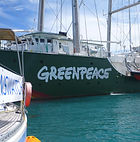
One thing you can do is not eat the food on the GREENPEACE RED LIST
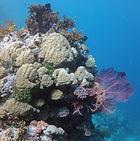
The oceans currently absorb about a third of the carbon dioxide emissions produced by human, roughly 22 million tons a day. Projections based on these numbers show that by the end of this century, continued emissions could reduce ocean pH by another 0.5 units. Shell-forming animals including corals, oysters, shrimp, lobster, many planktonic organisms, and even some fish species could be gravely affected as the increasing acidity breaks down their skeleton.
Unless humans are able to control and eventually eliminate our fossil fuel emissions, ocean organisms will find themselves under increasing pressure to adapt to their habitat's changing chemistry or perish.
This is another reason to reduce your carbon footprint and save the planet.
Hundreds of thousands of sea turtles, whales, and other marine mammals, and more than 1 million seabirds die each year from ocean pollution by ingestion of or entanglement in marine debris. Marine debris is manmade waste that is directly or indirectly disposed of in oceans, rivers, and other waterways. Most of it is plastic and a plastic bags can look like a jellyfish to an unsuspecting turtle.
Things you can do:
-
Use your own shopping bags and avoid plastic packaging
-
Recycle all the plastic you do use or dispose of it thoughtfully
-
Educate others about the problem and solutions
-
Start or participate in a coastal clean up
Ocean acidification

Plastic pollution
Help OceansWatch create the biggest reserve in the Solomon Islands - Your donation of $10 per acre will go towards the implementation of the Reef Islands Marine Park:
